Two-day in-person intensive
The Swallow Treat Retreat
A small, hands-on dysphagia treatment intensive centered on bolus-driven rehabilitation, imaging, and practical protocol design.
Current format
August 8–9, 2026 · Bethesda, Maryland
- 10
- maximum participants
- 1.5 CEUs
- intermediate level
- $950
- listed registration fee
Event details checked July 30, 2026. Confirm remaining seats before paying.
01
Course description
The 2026 focus is bolus-driven swallowing rehabilitation. The goal of this two-day course is to reframe the Speech-Language Pathology swallowing therapy toolbox. Dr. Humbert emphasizes restoring swallowing function over compensation, as well as innovation and practicality in healthcare.
Each attendee is given the opportunity to image, record, and analyze their own swallowing behavior—Swallow Selfies—using MBS and/or FEES during natural swallows, postures and maneuvers, and device-driven treatment options such as expiratory muscle strength training, electrical stimulation, lingual strengthening, and visual biofeedback.
Pre-recorded abnormal swallowing is integrated into the curriculum to provide a complete understanding of the immediate and long-term underlying physiological changes to expect in dysphagia therapy across various patient profiles. The course accepts only 10 attendees and is held at the Swallowing Wellness Center in Bethesda, Maryland.
02
Why do we need the Swallow Treat Retreat?
Traditional SLP management of dysphagia was based on symptom management—reducing cough, aspiration, and similar signs. In recent years, the profession has tried to transition away from simply reducing a disability through compensation and toward restoring swallowing function through neuroplasticity, motor learning, rehabilitation, and patient-centered practices.
That transition has proven difficult because SLPs originally established themselves in medical settings as professionals who sacrifice certain patient and professional needs to conform to the healthcare system. This includes assessing and treating swallowing with no imaging to confirm the presence or characteristics of dysphagia. We are now at a crossroads as we try to reconcile what the body needs to recover from dysphagia within healthcare systems that do not prioritize comprehensive dysphagia management.
03
Four treatment categories
- The Classics: postures, maneuvers, diet modifications, and nothing-by-mouth (NPO)
- Premium Upgrades (handhelds): lingual strengthening, electrical stimulation, and respiratory strength training
- Bolus-Driven Therapy (Personalized Eating Plans): using food and drink to treat feeding and swallowing difficulty, secretion management, and medication management
- Visual Biofeedback: imaging to advance restorative swallowing therapy through EMG, MBS, and FEES
04
Learning outcomes
- Describe the neurophysiological requirements that prioritize restoring swallowing function (eating food) instead of simply reducing the impact of the swallowing impairment (postures and maneuvers with no bolus)
- Categorize all dysphagia management therapeutic techniques as restorative (motor learning) versus deficit reduction (compensatory)
- Create realistic therapeutic protocols that can be carried out across many healthcare settings to target swallow-system recovery over traditional deficit-reduction (compensatory) practices
05
Instructor
Ianessa Humbert, Ph.D., SLP is a world-renowned scientist, researcher, educator, and highly sought-after speaker with expertise in swallowing and swallowing disorders. With over 400 speaking invitations from around the world, the most common feedback from attendees continues to be, “This is the first time a course has really forced me to think about what I’m doing.”
Dr. Humbert’s teaching philosophy requires attendees to question everything they think they know before learning can begin. Her innovative training style has been funded by ASHFoundation and extends to non-traditional learning formats. She is the co-creator of the Down the Hatch podcast, CEO and co-founder of STEP, and CEO of Swallowing Wellness, the world’s first outpatient clinic for people with swallowing difficulty.
06
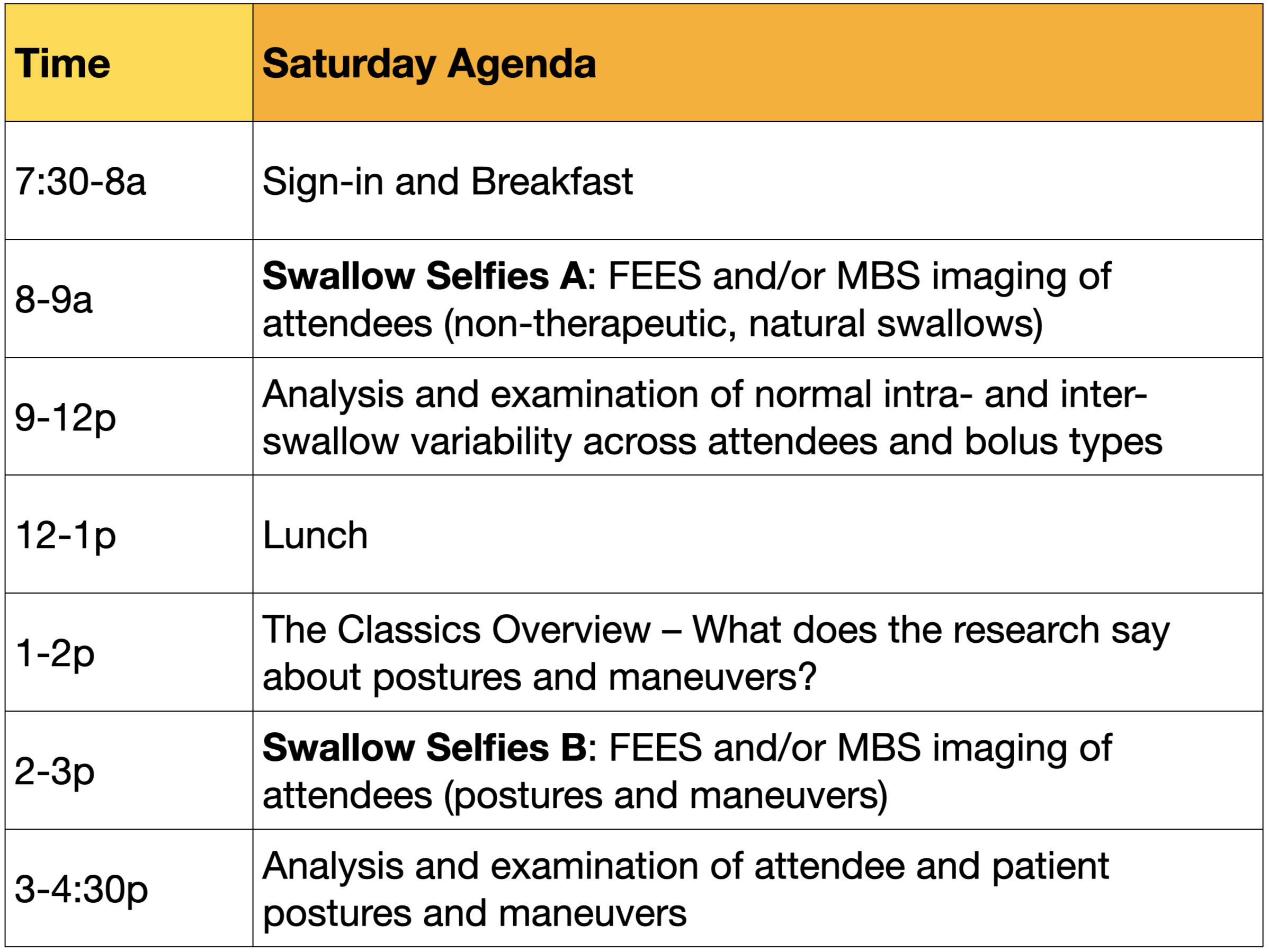
Saturday agenda
- 17:30–8:00 AM — Sign in and breakfast
- 28:00–9:00 AM — Swallow Selfies A: FEES and MBS during natural, non-therapeutic swallowing
- 39:00 AM–12:00 PM — Normal intra- and inter-swallow variability and bolus types
- 412:00–1:00 PM — Lunch
- 51:00–2:00 PM — The Classics: research, postures, and maneuvers
- 62:00–3:00 PM — Swallow Selfies B: postures and maneuvers
- 73:00–4:30 PM — Analysis of attendee and patient swallowing
07
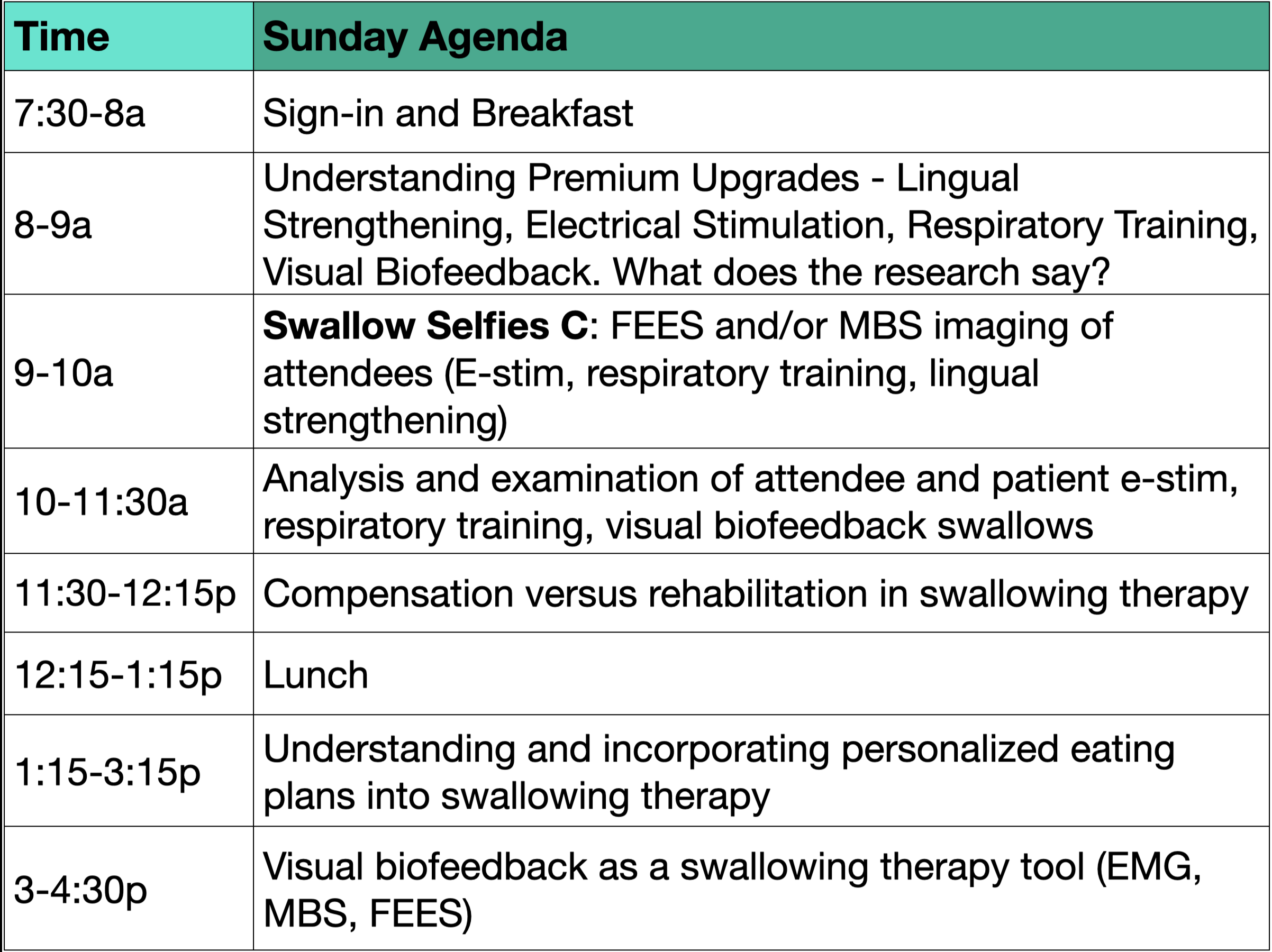
Sunday agenda
- 17:30–8:00 AM — Sign in
- 28:00–9:00 AM — Premium Upgrades: research
- 39:00–10:00 AM — Swallow Selfies C: electrical stimulation, respiratory strengthening, and lingual strengthening
- 410:00–11:30 AM — Analysis
- 511:30 AM–12:15 PM — Compensation versus rehabilitation
- 612:15–1:15 PM — Lunch
- 71:15–3:15 PM — Personalized eating plans
- 83:00–4:30 PM — Visual biofeedback
08
Included with registration
Instructional level: Intermediate. The $950 registration includes a listed $370 in additional value:
- Free access to the Swallowing Wellness Documentary, with an additional 0.5 CEUs and content that fulfills the Ethics professional-development requirement for ASHA certification
- One month of STEP Community membership on the CEU plan
- A link to your recorded MBS and FEES swallow images
- An anatomy and physiology poster
- Breakfast and lunch
- 1.5 CEUs
- A link to the course content
Swallowing Wellness Documentary
Included access; the source listing identifies an additional 0.5 CEUs and Ethics professional-development content.
View documentary courseSTEP CEU plan
The registration listing includes one month of STEP Community membership.
See STEP membership
Continue with this training
Opens the registration and payment page.