
3 min read
How is dysphagia diagnosed?
From a simple bedside exam to an X-ray of your swallow — what each test is like.
What clinicians look for on a swallowing X-ray
This silent side-by-side clip shows two swallows in motion. A clinician looks at timing, airway protection, and material left behind — not simply whether a swallow looks “normal” or “abnormal.”
It starts with your story
Before any test, a specialist listens: what feels hard, when it started, what you avoid. The Food Feel Profile is a good way to bring that story organized and complete.
The clinical evaluation
A speech-language pathologist watches you eat and drink different textures, checks how your mouth and throat move, and listens to your voice after you swallow. No machines needed.
The swallowing X-ray (MBSS)
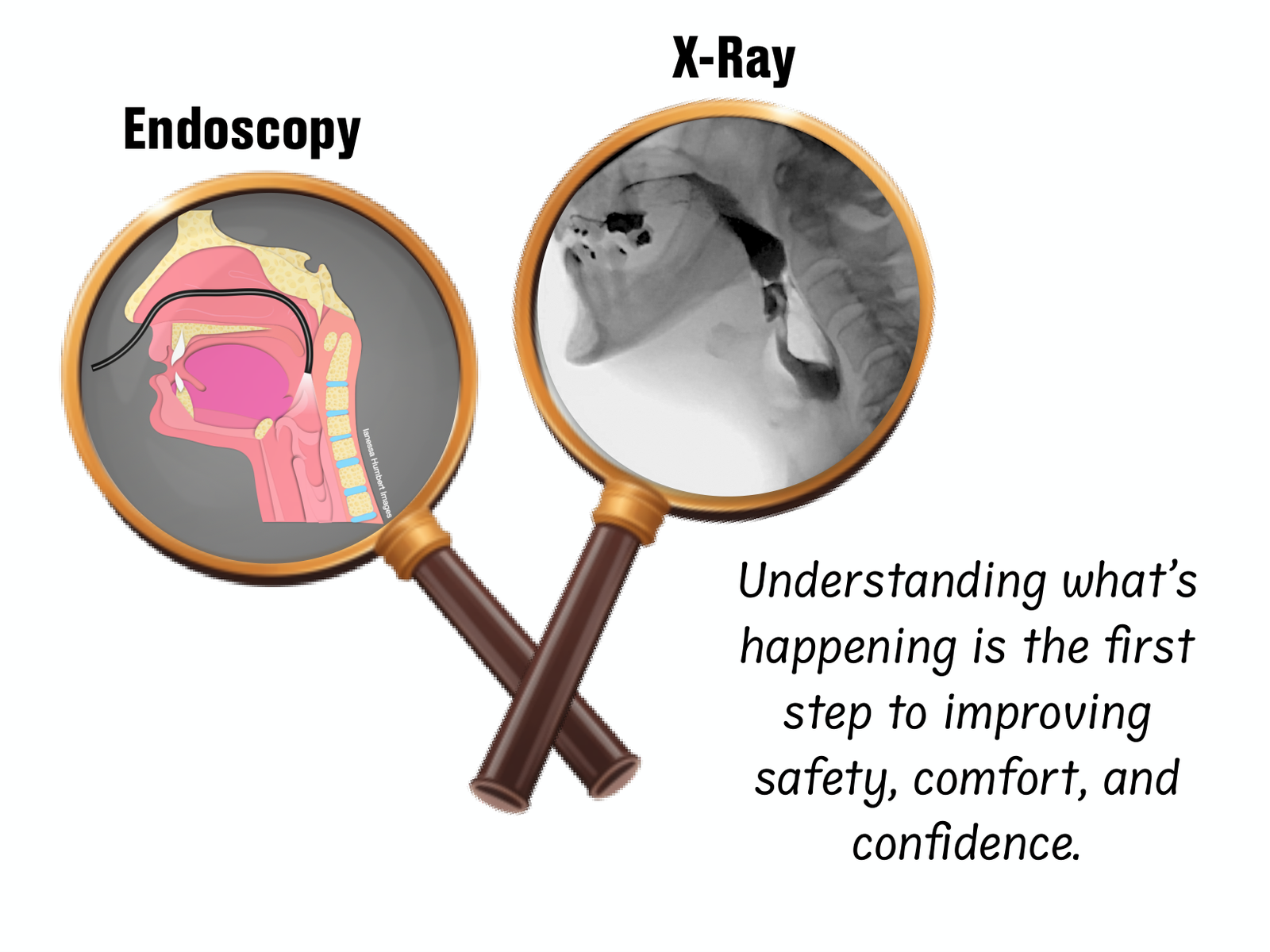
Also called a modified barium swallow study. You eat and drink foods mixed with barium while an X-ray video records your swallow in motion. The images help the clinical team see timing, movement, and where material travels.
The camera study (FEES)
A thin, soft camera passes through the nose to watch your throat while you swallow. No radiation, and it can be repeated to track progress.
Other tests
Depending on your symptoms, a doctor may also order tests of the food pipe, such as manometry (pressure measurement) or an upper endoscopy. Your care team picks what fits your situation.
Describe texture, difficulty, and symptoms for each item you choose. Free.
Talk with our teamQuestions are welcome. We will help you find the right visit.
The information on this site is educational and is not medical advice or a diagnosis. If you are choking or cannot breathe, call 911.