4 min read
How swallowing works — and what dysphagia means
A swallow moves food, drink, pills, or saliva to the stomach while protecting the airway. Here is what changes with dysphagia.
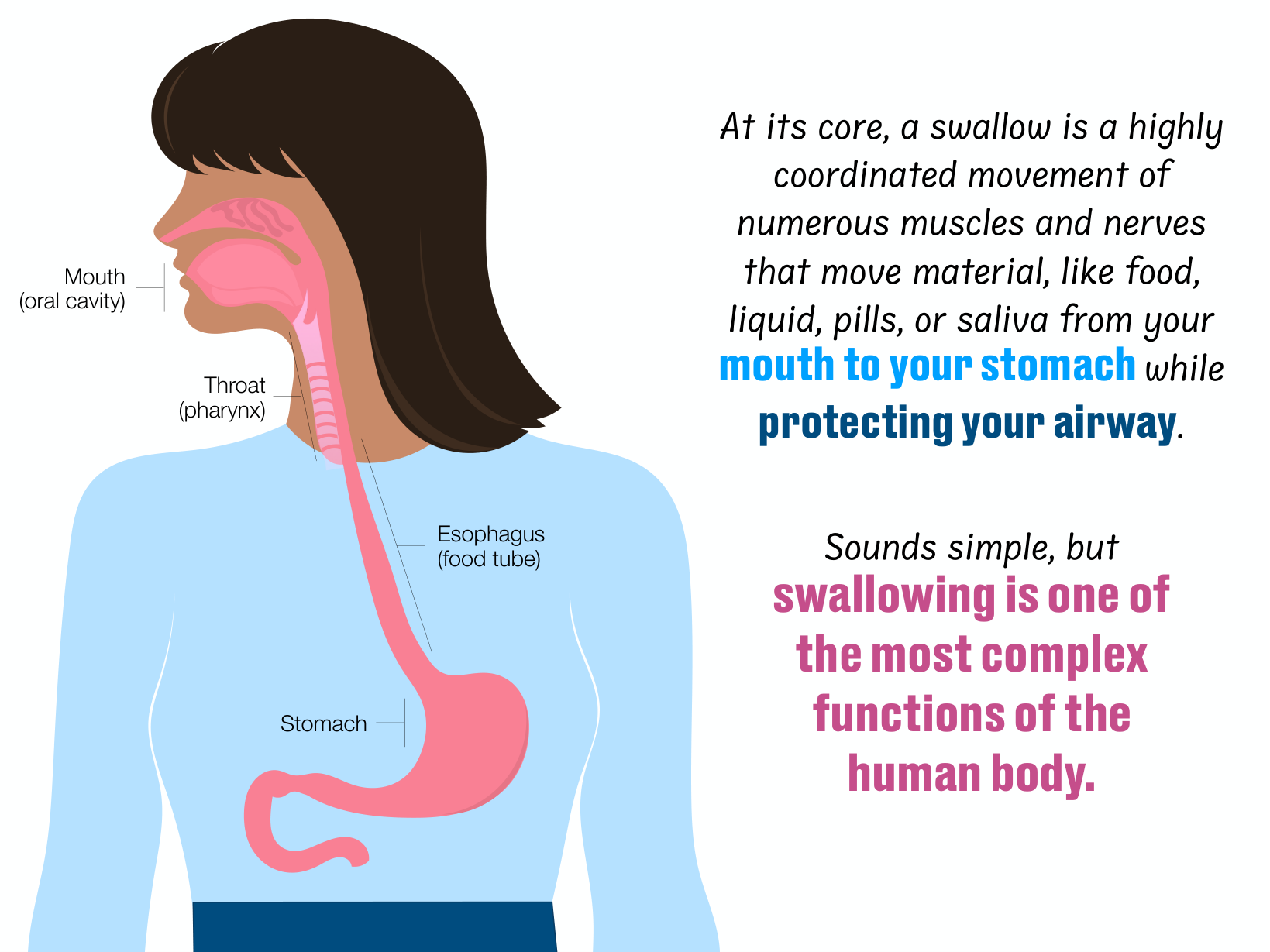
What is a swallow?
Dr. Humbert walks through what actually happens in a normal swallow, step by step.
What is dysphagia?
Dysphagia (dis-FAY-juh) means difficulty swallowing. It can happen at any age and has many possible causes. Some people notice extra effort or time; others notice coughing, pain, or food sticking.
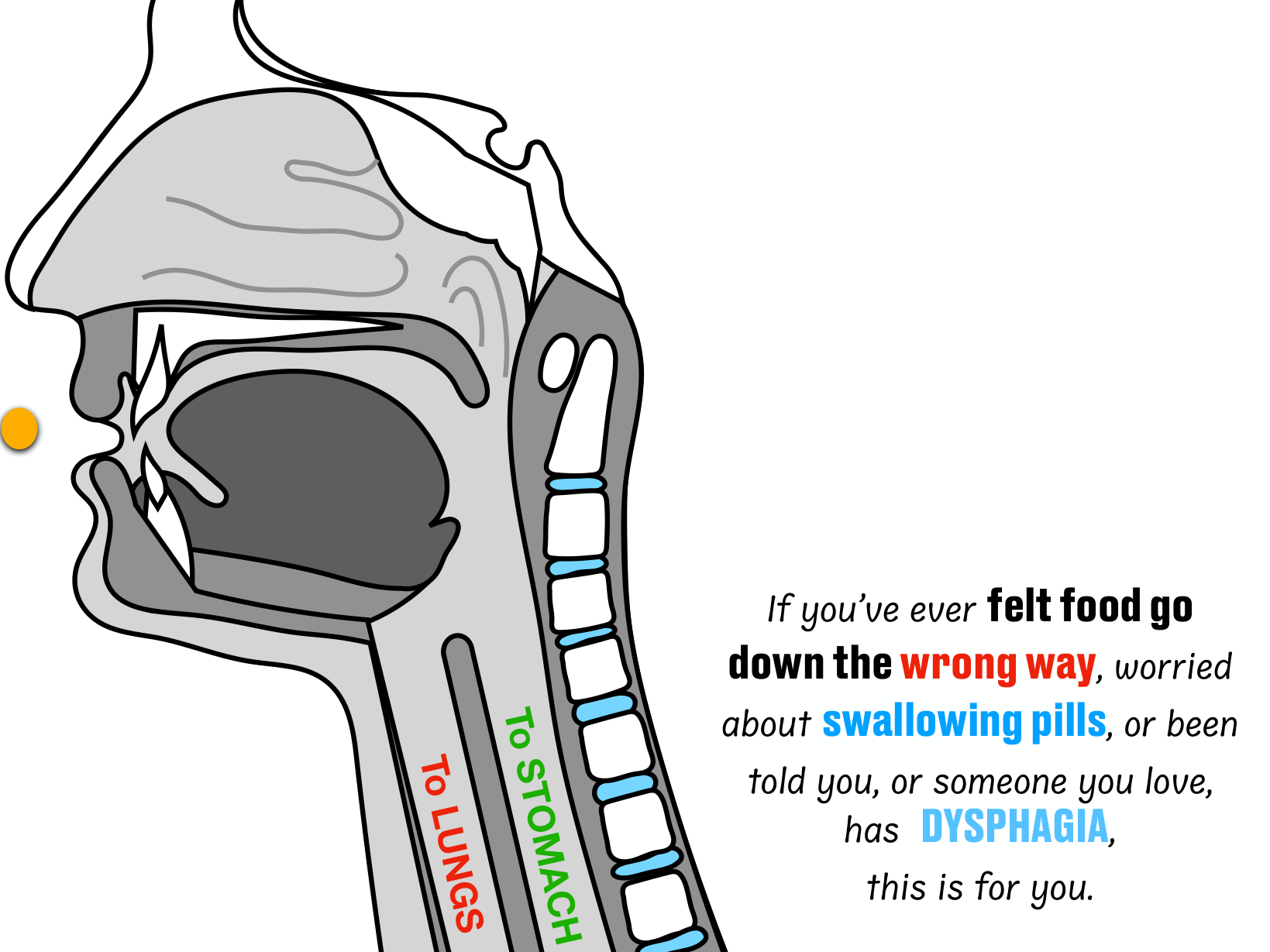
Two paths sit close together
The airway leads toward the lungs. The food pipe (esophagus) leads toward the stomach. A swallow has to move material into the food pipe while helping protect the airway.
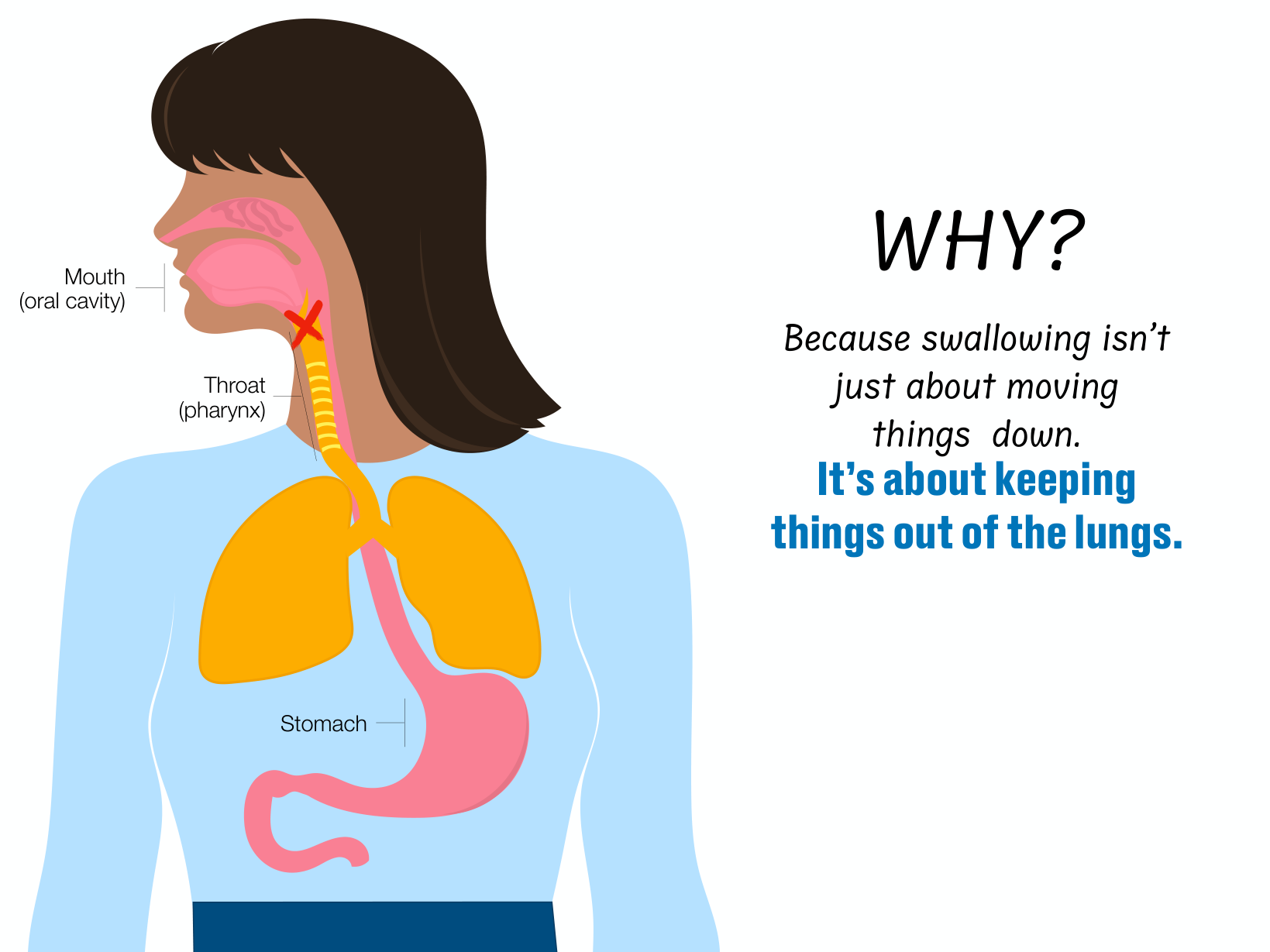
Protecting the airway
Many muscles and nerves coordinate airway protection during a swallow. If material enters the airway, some people cough, but others may have no obvious response. Symptoms and testing have to be considered together.
Common causes
Stroke, Parkinson's disease, and dementia are common causes. So are head and neck cancers and their treatments, acid reflux, age-related muscle weakness, and narrow spots in the food pipe.
How it affects daily life
Many people start avoiding meals with others out of worry or embarrassment. Untreated, dysphagia can also lead to chest infections, poor nutrition, and dehydration.
What you can do
If swallowing has changed, write down what you notice and talk with a medical professional. The Food Feel Profile can help organize your experience, but it cannot diagnose the cause. An evaluation can clarify whether testing or treatment is needed.
Describe texture, difficulty, and symptoms for each item you choose. Free.
Talk with our teamQuestions are welcome. We will help you find the right visit.
The information on this site is educational and is not medical advice or a diagnosis. If you are choking or cannot breathe, call 911.